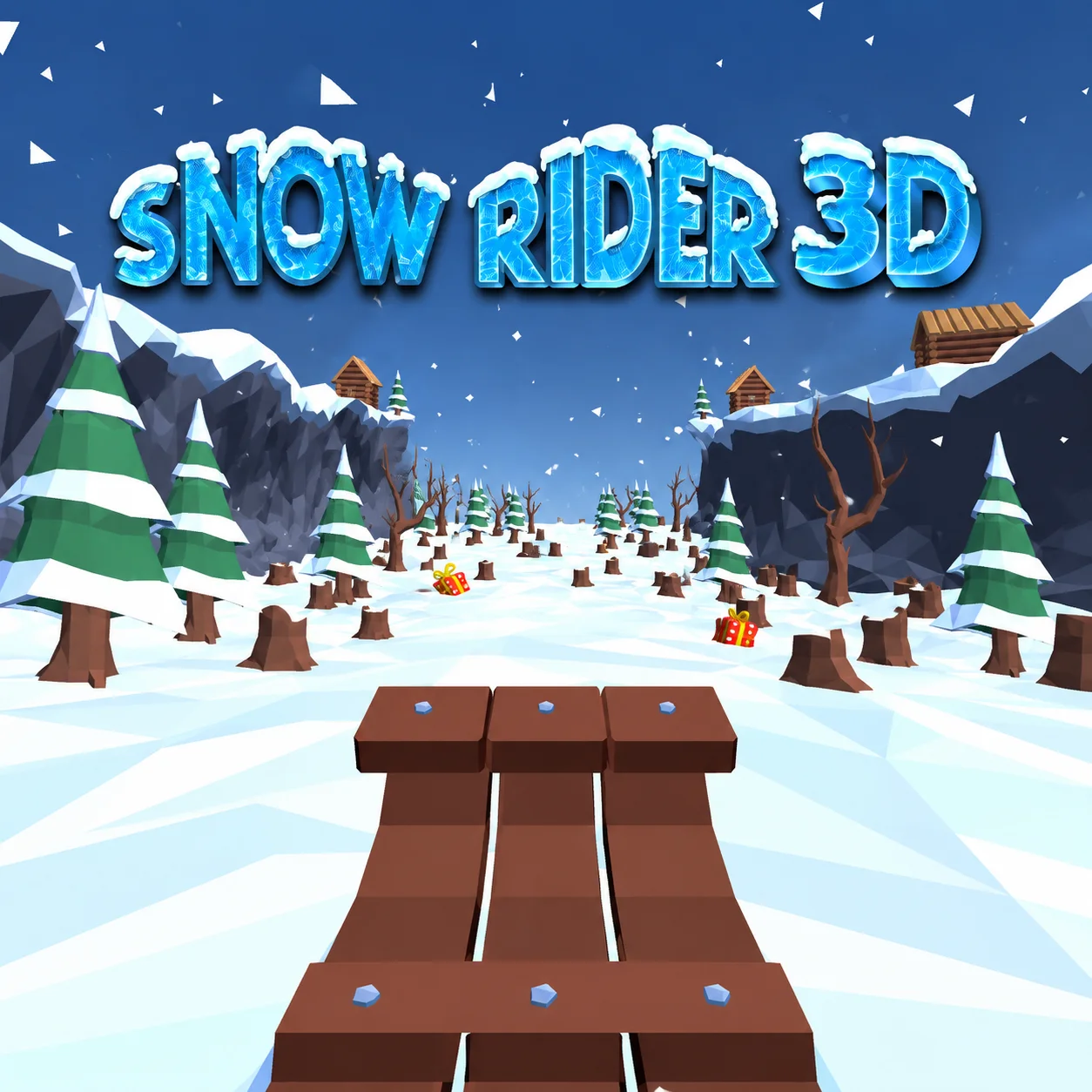








ABOUT SNOW RIDER 3D
Snow Rider 3D turns downhill movement into a fast snowboarding or sled-style obstacle run where gates, jumps, and speed all compete for attention.
Your goal: Descend the course while avoiding obstacles and maintaining enough control to continue through the run.
HOW TO PLAY SNOW RIDER 3D
- Start by learning the basic obstacle language of Snow Rider 3D: which hazards need a jump, which need a slide, and which are better handled by changing lanes. Once those responses become automatic, focus on score or speed.
- Downhill speed reduces the time available for steering.
- Snow ramps can change vertical position and landing angle.
- Obstacle placement rewards looking ahead rather than reacting at the last second.
Controls
- Steer Left/Right: PC: A / D or Arrow Left / Right | Mobile: Tap the Left/Right half or swipe sideways on the screen
TIPS AND TRICKS
- Line up with the safe gap before the slope carries you into it.
- Use jumps as opportunities to correct your trajectory, not just as spectacle.
- Avoid unnecessary steering on straight sections so you enter turns with a stable line.
- A fast descent is built from clean entries. If you enter a turn too wide, the correction usually costs more speed than the original shortcut saves. Use the shape of the slope to predict where you will land after a jump.
- If you keep failing the same spot, check whether the problem is the setup, the timing, or the landing. Once your runs are consistent, change only one thing at a time so you can tell real improvement from luck.
FAQ
What is the main goal in Snow Rider 3D?
Descend the course while avoiding obstacles and maintaining enough control to continue through the run.
What should I learn first in Snow Rider 3D?
Downhill speed reduces the time available for steering.
How does snow ramps can change vertical position and landing ang help during a run?
Snow ramps can change vertical position and landing angle.
When should I use obstacle placement rewards looking ahead rather than re?
Obstacle placement rewards looking ahead rather than reacting at the last second.
What is the most common way to lose a good attempt?
Use jumps as opportunities to correct your trajectory, not just as spectacle.
How can I make my next attempt more consistent?
A fast descent is built from clean entries. If you enter a turn too wide, the correction usually costs more speed than the original shortcut saves.
What should I prioritize when I start playing faster?
Use the shape of the slope to predict where you will land after a jump.