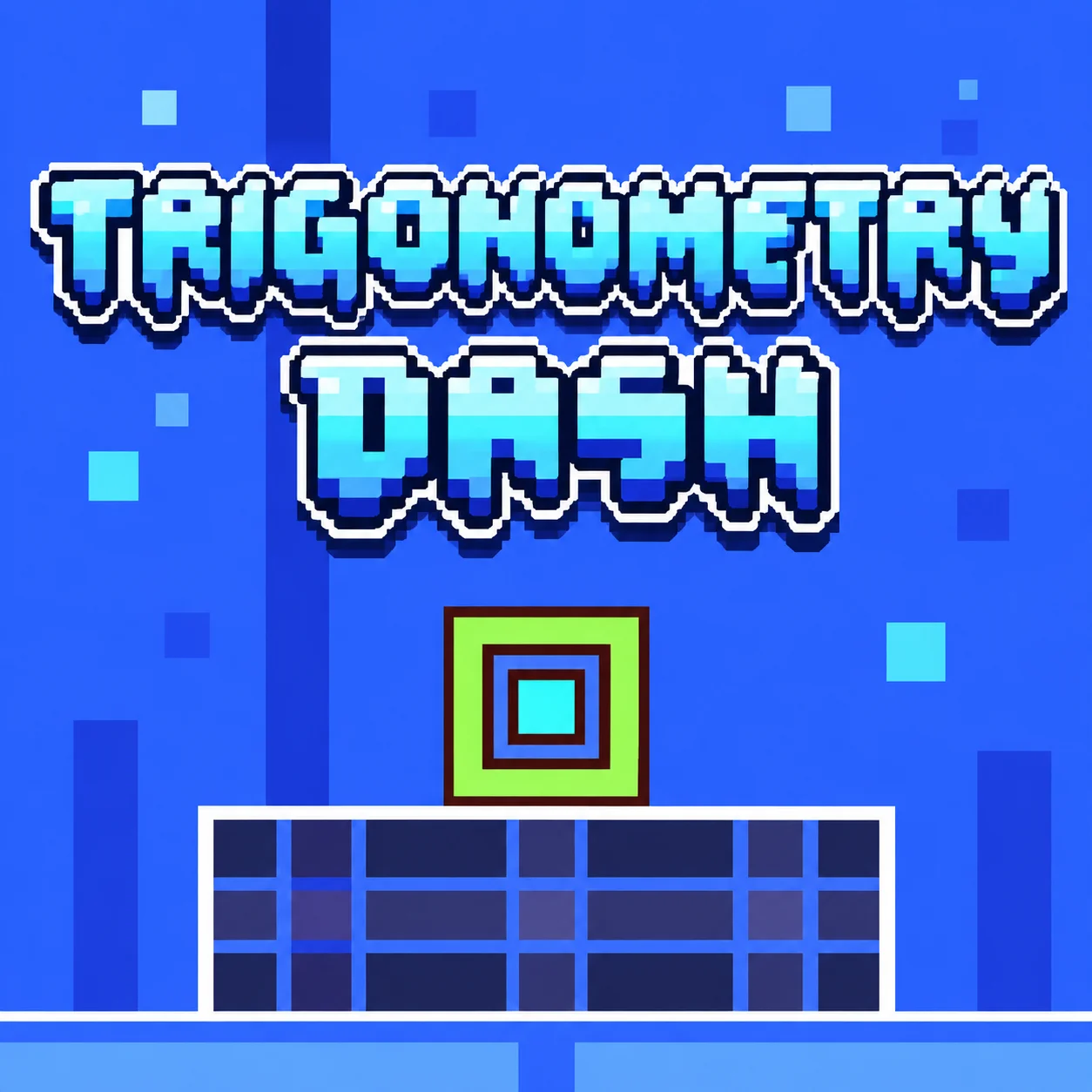










ABOUT TRIGONOMETRY DASH
Trigonometry Dash turns geometric movement into a timing exercise where angles, jumps, and obstacle spacing determine survival.
Your goal: Follow the route through geometric hazards while keeping the movement rhythm stable.
HOW TO PLAY TRIGONOMETRY DASH
- Trigonometry Dash is easiest to learn by memorizing patterns rather than reacting to every obstacle independently. Watch the visual cue, identify the next movement, and execute it with the smallest input that gives you control.
- Automatic or continuous movement reduces the number of direct controls and increases timing precision.
- Geometric shapes provide strong visual landmarks for jump timing.
- Pattern repetition helps turn difficult sections into predictable sequences.
Controls
- Jump: PC: Mouse click / Space / Arrow Up | Mobile: Tap the screen
- Hold: PC: Hold mouse button / Space | Mobile: Hold your finger on the screen
TIPS AND TRICKS
- Use the shapes themselves as timing markers rather than waiting for hazards to reach the character.
- Keep your input rhythm steady through repeated patterns.
- When a jump fails, check the previous landing position before changing the jump timing.
- Learn each section as a visual sequence: shape, gap, input, landing. This is more reliable than memorizing button presses without context. Once the route is known, optimize by removing hesitation rather than increasing every input.
- If you keep failing the same spot, check whether the problem is the setup, the timing, or the landing. Once your runs are consistent, change only one thing at a time so you can tell real improvement from luck.
FAQ
What is the main goal in Trigonometry Dash?
Follow the route through geometric hazards while keeping the movement rhythm stable.
What should I learn first in Trigonometry Dash?
Automatic or continuous movement reduces the number of direct controls and increases timing precision.
How does geometric shapes provide strong visual landmarks for ju help during a run?
Geometric shapes provide strong visual landmarks for jump timing.
When should I use pattern repetition helps turn difficult sections into p?
Pattern repetition helps turn difficult sections into predictable sequences.
What is the most common way to lose a good attempt?
Keep your input rhythm steady through repeated patterns.
How can I make my next attempt more consistent?
Learn each section as a visual sequence: shape, gap, input, landing. This is more reliable than memorizing button presses without context.
What should I prioritize when I start playing faster?
Once the route is known, optimize by removing hesitation rather than increasing every input.