










ABOUT OM NOM RUN
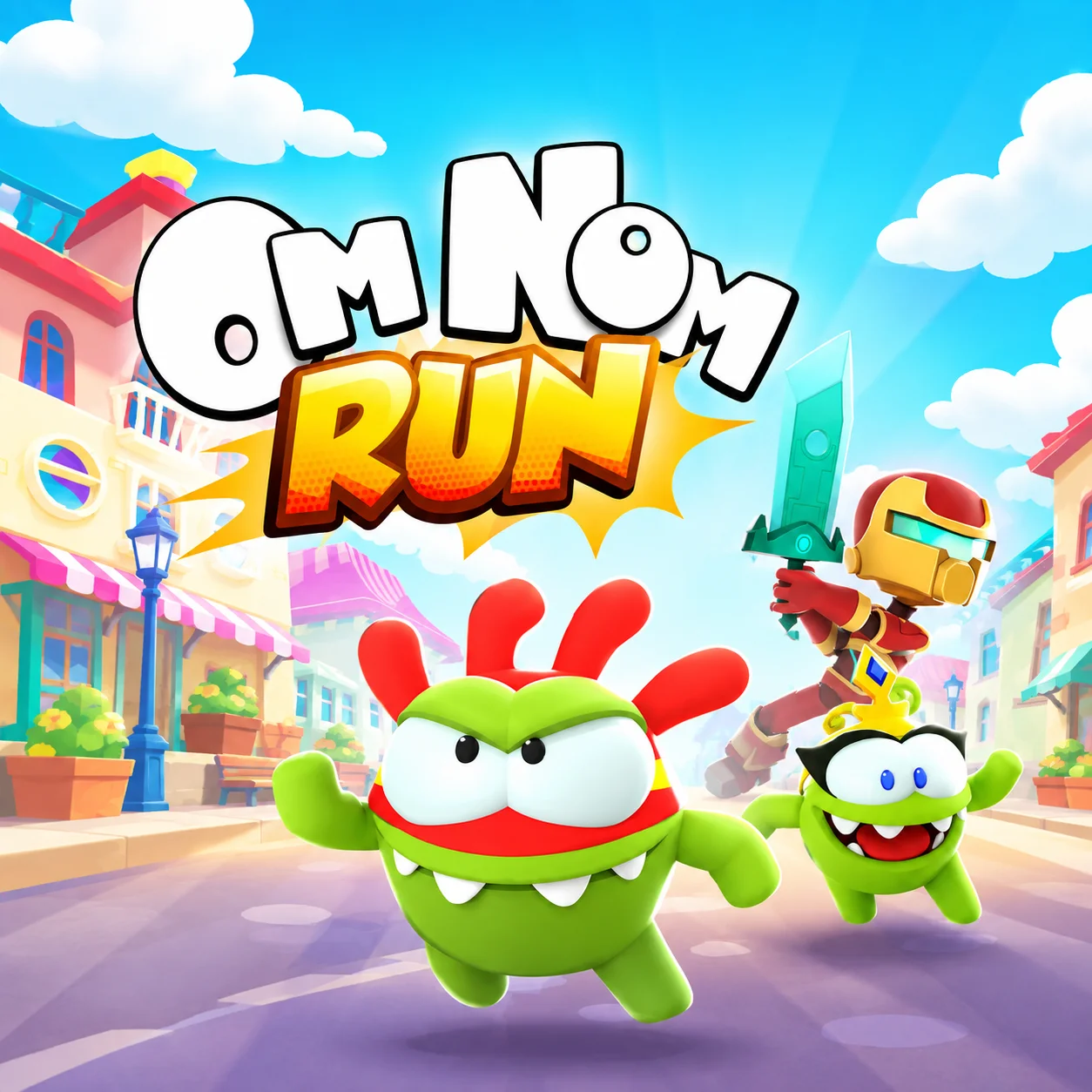
Om Nom Run is a colorful endless runner featuring quick lane changes, jumps, slides, and collectible-focused routes.
Your goal: Run as far as possible, avoid obstacles, and collect rewards while keeping the character moving.
HOW TO PLAY OM NOM RUN
- Good runs in Om Nom Run are built around anticipation. After every dodge, immediately identify the next threat so your recovery position is useful rather than leaving you trapped against one side.
- Lane switching handles lateral hazards while jumps and slides solve vertical ones.
- Collectibles encourage route choices that can be riskier than simply staying safe.
- Increasing speed reduces the time available for correction.
Controls
- Jump: PC: Space / Arrow Up | Mobile: Tap the screen
TIPS AND TRICKS
- Choose a safe lane first, then collect only what fits naturally into that route.
- Slide under low obstacles instead of jumping when another hazard is waiting after the landing.
- Look past the nearest collectible to see what the next obstacle requires.
- High-score routes balance collection and survival. A slightly lower-value pickup is often better if it leaves two safe escape lanes afterward. Use predictable obstacle sequences to establish a rhythm and save reaction-heavy decisions for unusual patterns.
- If you keep failing the same spot, check whether the problem is the setup, the timing, or the landing. Once your runs are consistent, change only one thing at a time so you can tell real improvement from luck.
FAQ
What is the main goal in Om Nom Run?
Run as far as possible, avoid obstacles, and collect rewards while keeping the character moving.
What should I learn first in Om Nom Run?
Lane switching handles lateral hazards while jumps and slides solve vertical ones.
How does collectibles encourage route choices that can be riskie help during a run?
Collectibles encourage route choices that can be riskier than simply staying safe.
When should I use increasing speed reduces the time available for correct?
Increasing speed reduces the time available for correction.
What is the most common way to lose a good attempt?
Slide under low obstacles instead of jumping when another hazard is waiting after the landing.
How can I make my next attempt more consistent?
High-score routes balance collection and survival. A slightly lower-value pickup is often better if it leaves two safe escape lanes afterward.
What should I prioritize when I start playing faster?
Use predictable obstacle sequences to establish a rhythm and save reaction-heavy decisions for unusual patterns.