






ABOUT 3DASH
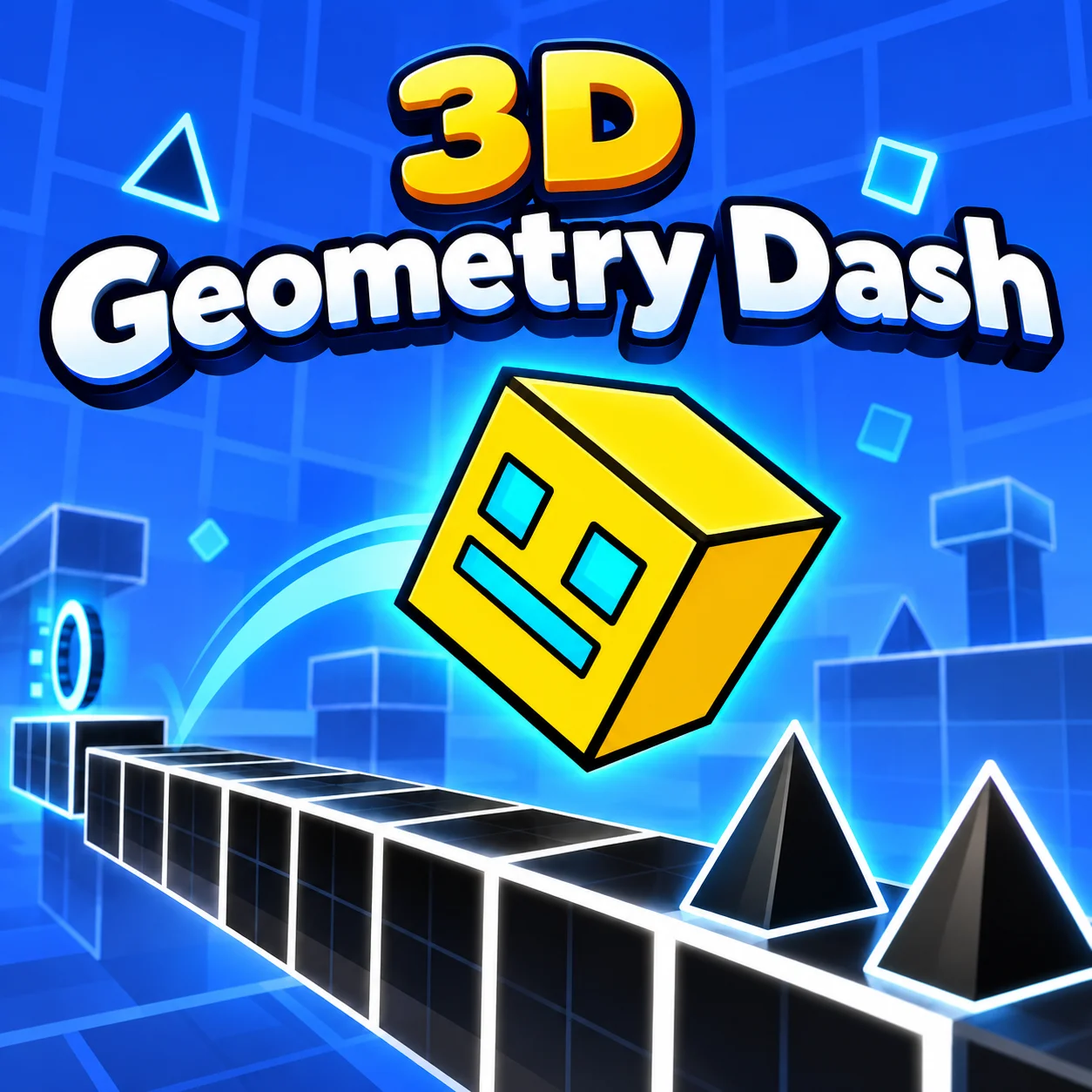
3Dash is a 3D take on fast precision platforming, combining geometric hazards with a stronger need for spatial awareness.
Your goal: Navigate the 3D course, clear hazards, and reach the end without losing control of the route.
HOW TO PLAY 3DASH
- Use the opening attempts in 3Dash to map the rhythm of the level. Once you know where the movement changes, practice the transitions between patterns; those handoffs are usually harder than isolated jumps.
- Depth changes how you judge distance compared with a flat 2D runner.
- Camera orientation affects your ability to read the next obstacle.
- Fast movement leaves little room for late correction.
Controls
- Jump / Flap: PC: Space, Arrow Up, or left-click | Mobile: Tap the right half of the touchscreen
- Pause the game: PC: Esc or P | Mobile: Tap the Pause icon in the corner of the screen
TIPS AND TRICKS
- Center the camera on the intended landing area before committing to a jump.
- Use larger platforms as visual anchors when the depth of the next gap is difficult to judge.
- Avoid unnecessary camera movement during a precise jump.
- Think in terms of depth as well as left and right. A platform that looks close can still require a different timing because of its vertical position. Practice camera positioning separately from movement; once both are stable, the route becomes much easier to repeat.
- If you keep failing the same spot, check whether the problem is the setup, the timing, or the landing. Once your runs are consistent, change only one thing at a time so you can tell real improvement from luck.
FAQ
What is the main goal in 3Dash?
Navigate the 3D course, clear hazards, and reach the end without losing control of the route.
What should I learn first in 3Dash?
Depth changes how you judge distance compared with a flat 2D runner.
How does camera orientation affects your ability to read the nex help during a run?
Camera orientation affects your ability to read the next obstacle.
When should I use fast movement leaves little room for late correction?
Fast movement leaves little room for late correction.
What is the most common way to lose a good attempt?
Use larger platforms as visual anchors when the depth of the next gap is difficult to judge.
How can I make my next attempt more consistent?
Think in terms of depth as well as left and right. A platform that looks close can still require a different timing because of its vertical position.
What should I prioritize when I start playing faster?
Practice camera positioning separately from movement; once both are stable, the route becomes much easier to repeat.